
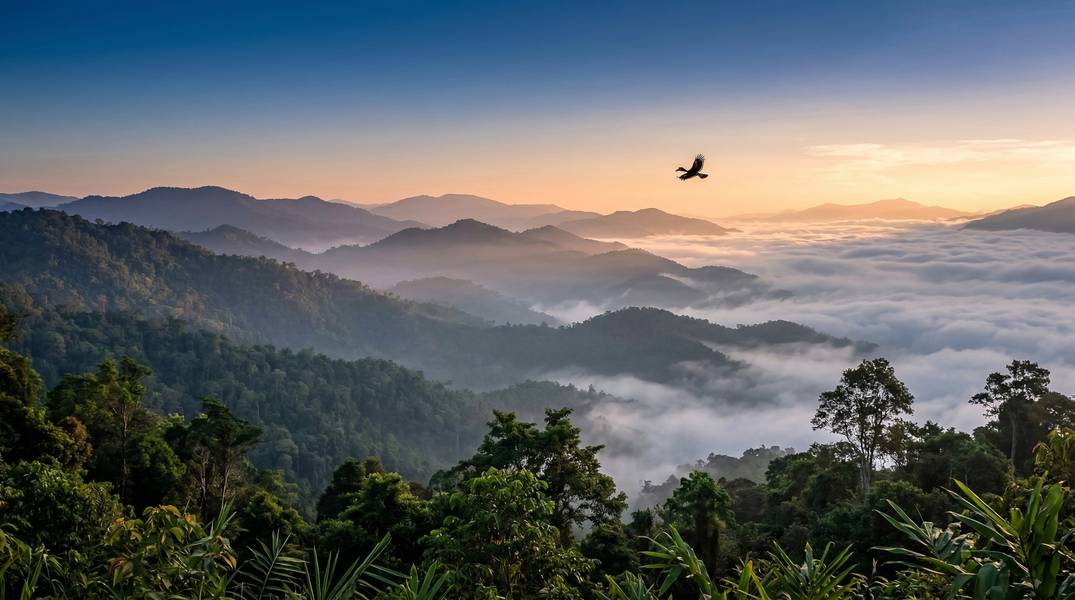
Kaeng Krachan National Park
Overview
อุทยานแห่งชาติแก่งกระจาน • Kaeng Krachan National Park
Established on June 12, 1981, Kaeng Krachan is Thailand’s largest national park at 2,915 sq km — roughly twice the size of Greater London. Stretching along the eastern slope of the Tenasserim Mountain Range on the Myanmar border, the park was inscribed as a UNESCO World Heritage Site in 2021 as part of the Kaeng Krachan Forest Complex, recognized for its extraordinary biodiversity under Natural Criterion X.
The park sits at the confluence of four zoogeographical sub-regions (Sundaic, Sino-Himalayan, Indochinese, and Indo-Burmese), making it a crossroads where northern and southern species overlap. This unique position supports approximately 480 bird species, 8 species of wild cats including Bengal tigers, wild elephants, leopards in both spotted and melanistic forms, and 81 rare plant species. For birdwatchers, Kaeng Krachan is one of mainland Southeast Asia’s premier destinations.
For medical tourists, Kaeng Krachan requires more planning than parks closer to Bangkok. The reservoir area and easy nature trail are accessible for recovering patients, while deeper park experiences involve remote, rugged terrain with limited medical access. The nearest international-standard hospital (Bangkok Hospital Hua Hin, JCI-accredited) is approximately 1.5 hours from Park HQ.
Important: Park fees, hours, trail conditions, and seasonal closures are subject to change without notice. Verify current information at the official DNP website before your visit. Wildlife sightings cannot be guaranteed. The upper park (Ban Krang, Phanoen Thung) closes August through October.
Why Kaeng Krachan is Special
UNESCO World Heritage Site
The Kaeng Krachan Forest Complex was inscribed as a UNESCO World Heritage Site on July 26, 2021 (44th Session of the World Heritage Committee), under Natural Criterion X for biodiversity. The complex covers 409,000 hectares across four protected areas:
- Kaeng Krachan National Park (the largest component)
- Kui Buri National Park
- Chaloem Phrakiat Thai Prachan National Park
- Mae Nam Phachi Wildlife Sanctuary
This is Thailand’s 6th World Heritage property and 3rd natural property. The UNEP-WCMC ranks it among the world’s top 500 most irreplaceable protected areas.
Thailand’s Largest National Park
At 2,915 sq km (1,125 sq mi), Kaeng Krachan is Thailand’s single largest national park. The park spans elevations from 37m to 1,513m above sea level, encompassing six distinct forest types:
- Dry evergreen forest (~65% of the park)
- Semi-evergreen forest
- Moist evergreen forest
- Mixed deciduous forest
- Montane cloud forest
- Deciduous dipterocarp forest
Bengal Tiger Conservation
In January 2025, the park announced a landmark conservation milestone: three Bengal tiger cubs — the first recorded litter of three in the park’s history. Camera trap footage from July 2024 confirmed the mother (KKT-003F) with her cubs. As of early 2025, the park has 6 confirmed adult Bengal tigers and 3 cubs, monitored through the SMART Patrol initiative.
Bengal tigers are listed as Endangered by the IUCN, with approximately 4,500 estimated worldwide. Thailand maintains one of few remaining breeding populations.
Wildlife & Nature
What You Might See
Wildlife sightings depend on season, time of day, location, and luck. Animals roam freely across 2,915 sq km of protected wilderness.
| Animal | Best Time | Best Location | Likelihood |
|---|---|---|---|
| Asian elephant | Afternoon, dusk | Pa La-U road, Huai Sad Yai area | Moderate-Good |
| Leopard (spotted & melanistic) | Dry season, dusk | Waterhole zone km 9-12, Ban Krang road | Moderate (weekly in dry season) |
| Gaur (wild cattle) | Early morning | Waterhole zone, forest clearings | Moderate |
| Hornbills (7 species) | Morning | Waterhole zone km 9-12, Ban Krang area | Good |
| Broadbills (7 species) | Morning, breeding season | Ban Krang forest trails | Moderate |
| Sambar deer | Dusk, night | Main road, forest edges | Good |
| Yellow-throated marten | Daytime | Ban Krang campsite surrounds | Moderate |
| Malayan porcupine | Night | Ban Krang campsite (behind restaurant) | Moderate-Good |
| Civets (various species) | Night | Ban Krang, main road | Moderate |
| Clouded leopard | Night | Road from Ban Krang to Phanoen Thung | Rare |
| Bengal tiger | Any time | Throughout park | Extremely rare |
Warning: Wild elephants are dangerous. Fatal encounters have occurred in this park — both elephants killed by illegal electric fences and villagers killed by elephants. Maintain maximum safe distance, stay in your vehicle, and follow ranger instructions. Never approach, surround, or provoke elephants.
Birdwatching
With approximately 480 recorded species, Kaeng Krachan is one of the best birding destinations in mainland Southeast Asia.
Seven Hornbill Species:
- Great hornbill
- Rusty-cheeked hornbill (specialty — rare elsewhere in Thailand)
- Wreathed hornbill
- Oriental pied hornbill
- Austen’s brown hornbill
- Tickell’s brown hornbill
- White-crowned hornbill
All Seven Broadbill Species of Thailand:
- Green broadbill
- Black-and-red broadbill
- Long-tailed broadbill
- Silver-breasted broadbill
- Banded broadbill
- Black-and-yellow broadbill
- Dusky broadbill
Other Notable Species:
- Ratchet-tailed treepie (Thailand’s only known population — at Phanoen Thung)
- Red-bearded bee-eater
- White-fronted scops owl (rare, vulnerable)
- Spot-bellied eagle-owl
- Great eared nightjar
- Crested serpent eagle
Birdwatching Seasons:
- November-February: Migratory and wintering species
- March-June/July: Breeding and migration peak — best for broadbills and hornbills
- Year-round for resident species
Reptiles & Snakes
The park hosts 120+ reptile species including 70 snake species. Snake encounters are a real consideration:
| Species | Risk Level | Notes |
|---|---|---|
| King cobra | High caution | More frequent here than elsewhere in Thailand |
| Pope’s pit viper | High caution | Arboreal; found at trail edges |
| White-lipped pit viper | High caution | Common in humid areas |
| Himalayan mountain pit viper | Moderate caution | Higher elevations |
| Reticulated python | Low risk | Large but non-venomous |
| Brongersma’s short-tailed python | Low risk | Rare |
Snake Safety: Stay on trails, use a torch at night, wear closed shoes (not sandals), never step over logs without checking the other side, and never approach or corner any snake.
Endemic & Rare Species
The Kaeng Krachan Forest Complex harbors 48 endemic species and 81 rare species:
- Prunus kaengkrachanensis — discovered 2015, endemic to this forest complex
- Trichosanthes phonsenae — the world’s only known population
- Geostachys smitinandii — shared only with the Khao Yai complex
- Kamettia chandeei — endemic to the park
- Kritsana / Agarwood (Aquilaria malaccensis) — threatened species
Key Areas & Km Marker System
The park uses a km marker system starting from a road junction 1.7 km before Sam Yod Checkpoint. Rangers, guides, and visitors use this system for navigation and wildlife reporting.
| Location | Km Marker | Elevation | Notes |
|---|---|---|---|
| Sam Yod Checkpoint | km 1.7 | ~100m | Main entrance to central park area |
| Waterhole Zone | km 9-12 | ~200m | Best area for hornbills, leopards, gaur (dry season) |
| Ban Krang Campsite | km 15 | ~300m | Best wildlife base camp |
| Phanoen Thung Campsite | km 30 | ~1,200m | Sea of mist viewpoint; end of road |
Total road length: 36.5 km from Sam Yod to Phanoen Thung.
Pa La-U Waterfall is accessed via a completely separate entrance from the Hua Hin side (~62 km from Hua Hin). It is NOT accessible from the main park road.
Activities & Experiences
Hiking Trails
| Trail | Distance | Difficulty | Time | Post-Surgery Suitability |
|---|---|---|---|---|
| Khaowang Reservoir Nature Trail | 2.7 km loop | Easy | 1-1.5 hours | Week 2+ (dental, minor cosmetic) |
| Pa La-U Waterfall (tiers 1-3) | ~1.5 km one-way | Easy-Moderate | 1-2 hours | Week 3+ with caution |
| Pa La-U Waterfall (to tier 5) | ~3.5 km round trip | Moderate-Challenging | 2-3 hours | Not recommended during recovery |
| Ban Krang area trails | 2-8 km | Moderate | 2-4 hours | Not recommended during recovery |
| Phanoen Thung viewpoint | Short walk from campsite | Easy (at camp) | 30 min | Week 4+ (if transported by 4WD) |
Khaowang Reservoir Nature Trail (Recommended for Recovery)
The most suitable trail for recovering medical tourists.
- Distance: 2.7 km loop
- Difficulty: Easy
- Time: 1-1.5 hours
- Surface: Marked trail, mostly flat
- Shade: Partial coverage
- Highlights: Scenic views of mountains and reservoir, birdwatching
- Mobile Signal: Good (near HQ area)
- Start: Near Park Headquarters
Pa La-U Waterfall Trail
Pa La-U features multiple tiers (sources cite 11-16 total) with the first 5 levels accessible to the public.
- Tiers 1-3: Moderate walk; swimming pools available; fish that nibble (harmless)
- Tiers 4-5: Rocky terrain, climbing over boulders — challenging
- Food restriction: Food is prohibited past level 1 (checkpoint enforced)
- Hours: 08:30-16:30 daily
- Open year-round (even when upper park closes)
- Separate entrance from the Hua Hin side
Phanoen Thung Sea of Mist
The park’s most iconic experience — a pre-dawn viewpoint at 1,207m elevation overlooking a sea of mist blanketing the valleys below.
- Best time: Arrive 04:30-05:00 AM for sunrise
- Season: November-February (most reliable mist conditions)
- Access: 4WD required; timed one-way road schedule between Ban Krang and Phanoen Thung
- Road schedule: Uphill 05:00-08:00 AM and 13:00-15:00 PM; Downhill 09:00-11:30 AM and 16:00-17:00 PM
- Temperature: Cool at 1,200m — bring warm layers (can surprise visitors expecting tropical heat)
- Closed: August through October
Water Activities
| Activity | Location | Cost | Difficulty | Notes |
|---|---|---|---|---|
| Reservoir sightseeing boat | Kaeng Krachan Reservoir | 400 THB per boat | Easy | Scenic; low effort; suitable for early recovery |
| Reservoir fishing boat | Kaeng Krachan Reservoir | 800-1,500 THB (up to 10 people) | Easy | Relaxing; minimal exertion |
| Swimming | Pa La-U Waterfall tiers 1-3 | Park entry fee | Easy-Moderate | Fish nibble skin (harmless); check water levels after rain |
| Kayaking | Kaeng Krachan Reservoir | Rentals near HQ | Moderate | Upper body effort; not for recent surgery patients |
| River rafting (family) | Near dam, Phetchaburi River | Varies | Easy | Family-friendly; available year-round |
Wildlife Watching
Best Locations:
- Waterhole zone km 9-12: Hornbills, leopards (dry season), gaur — the park’s premier wildlife area
- Ban Krang campsite surrounds: Martens, porcupines, civets at night; snakes at edges
- Ban Krang to Phanoen Thung road: Occasional clouded leopard sightings
- Phanoen Thung area: Highland birds, raptors, ratchet-tailed treepie
- Pa La-U road / Huai Sad Yai Village: Wild elephants (frequently present in the area)
Best Times: Dawn (05:00-07:00 AM), dusk (16:00-18:00 PM), and after dark for civets and porcupines.
Recommended Operators:
- Tontan Travel Wildlife Tours — Guided birding and wildlife tours
- Samarn Bird Camp — Birding-focused guides, near main gate
- Baan Maka Nature Lodge — English-speaking staff, guided tours
Photography
| Spot | Subject | Best Time | Notes |
|---|---|---|---|
| Phanoen Thung viewpoint | Sea of mist, sunrise | 04:30-06:30 AM | The park’s iconic shot |
| Second viewpoint (west of Phanoen Thung) | Mountain panorama | Sunrise/sunset | Less crowded |
| Waterhole zone km 9-12 | Wildlife (hides available) | Dawn, dusk | Leopards, hornbills, gaur |
| Pa La-U Waterfall | Cascades, butterflies | Morning | Best light through canopy |
| Kaeng Krachan Reservoir | Sunset, islands | Late afternoon | Dam area |
For Medical Tourists
Physical Requirements Assessment
| Factor | Level | Details |
|---|---|---|
| Walking Distance | Variable | 0 km (boat tour) to 8+ km (Ban Krang trails) |
| Elevation | 37-1,200m (accessible areas) | Cool at Phanoen Thung; hot at lower elevations |
| Temperature | 15-35°C depending on elevation and season | Bring layers for Phanoen Thung; sun protection at reservoir |
| Shade | Excellent on forest trails | Limited at reservoir and viewpoints |
| Rest Areas | Fair | Restaurants at HQ, Ban Krang, Phanoen Thung; benches at Pa La-U lower tiers |
| Mobile Signal | Varies greatly | Good at HQ; none at Pa La-U; limited-to-none at Ban Krang and Phanoen Thung |
Recovery Week Recommendations
| Activity | Difficulty | Earliest Safe | Ideal Week | Key Considerations |
|---|---|---|---|---|
| Reservoir boat tour | Easy | Week 1 | Week 2+ | Low effort, scenic, accessible from HQ |
| Reservoir nature trail (2.7 km) | Easy | Week 2 | Week 2-3 | Flat, partial shade, near HQ with signal |
| Sunset at dam | Easy | Week 1 | Week 1+ | Drive up, short walk |
| Birdwatching from vehicle | Easy | Week 1 | Week 2+ | No walking; along main road |
| Pa La-U tier 1 only | Easy | Week 2 | Week 3+ | Short walk, benches available |
| Pa La-U tiers 1-3 | Easy-Moderate | Week 3 | Week 4+ | Rocky sections; swimming possible |
| Ban Krang wildlife watching | Moderate | Week 4 | Week 4+ | Drive in; minimal walking at campsite |
| Phanoen Thung viewpoint | Moderate | Week 4 | Week 5+ | Requires pre-dawn start, 4WD transport, cool temps |
| Ban Krang hiking trails | Moderate-Challenging | N/A | N/A | Not recommended during recovery |
| Pa La-U upper tiers (4-5) | Challenging | N/A | N/A | Not recommended during recovery |
Procedure-Specific Guidance
| Procedure Type | Earliest Visit | Recommended Activities |
|---|---|---|
| Dental (simple) | Week 1 | Reservoir boat tour, sunset at dam |
| Dental implant | Week 2 | Reservoir area, birdwatching from vehicle |
| LASIK | Week 2 | All easy activities; bring UV-protective sunglasses |
| Minor cosmetic | Week 2 | Reservoir trail, boat tour |
| Rhinoplasty | Week 2 | Boat tour only; avoid sun exposure and dusty trails |
| Abdominal surgery | Week 3 | Limited to reservoir boat tour; avoid rough roads |
| Orthopedic (minor) | Week 4 | Vehicle-based only; avoid all uneven terrain |
| Cardiac procedures | Week 4+ | Consult cardiologist; avoid heat and altitude |
| Hip/knee replacement | Week 6+ | Doctor approval required; trails not recommended |
Medical Advisory: Consult your treating physician before any outdoor activities post-surgery. Kaeng Krachan is a remote park — the nearest JCI-accredited hospital (Bangkok Hospital Hua Hin) is approximately 1.5 hours from Park HQ. Medical tourists should carry a hospital contact card, prescribed medications, and inform someone of their park itinerary. Early morning visits avoid midday heat at lower elevations.
Why Kaeng Krachan Can Suit Medical Tourists
- Flexible activity levels: From zero walking (boat tours) to gentle reservoir trail to serious hiking
- Day trip feasible from Hua Hin: ~60 km, approximately 1-1.5 hours
- Time in nature: Immersive forest environment may support mental wellness during recovery
- Birdwatching from vehicle: Exceptional wildlife along main road with no walking required
Why Kaeng Krachan Requires Caution
- Remote location: Limited medical facilities; community hospital (~20 km) has basic care only
- No mobile signal in most of the park interior
- Wild elephant encounters: Real risk, especially on Pa La-U road
- Snake risk: Higher than average — 70 species including king cobra
- Rugged terrain: Most trails are unpaved and uneven
- 4WD required for the park’s signature experiences (Ban Krang, Phanoen Thung)
Nearest Hospitals
| Hospital | Distance from HQ | Travel Time | Type | Key Services |
|---|---|---|---|---|
| Kaeng Krachan Hospital | ~20 km | ~30 min | Community (200 beds) | Basic emergency care |
| Bangkok Hospital Phetchaburi | ~55 km | ~1 hour | Private (Bangkok Hospital Group) | Intermediate care |
| Phetchaburi Hospital | ~60 km | ~1 hour | Government (447 beds) | Provincial general hospital |
| Bangkok Hospital Hua Hin | ~80 km | ~1.5 hours | Private, JCI-accredited | Full specialist services, helicopter air ambulance |
Bangkok Hospital Hua Hin: JCI-accredited international hospital with full specialist services and helicopter air ambulance capability. This is the closest facility with international-standard emergency care.
Emergency Contacts:
- National Emergency: 1669
- Park Headquarters: +66 9 1050 4461
- Park Visitor Center: +66 3 277 2311
- Park Office: +66 3 277 2312
- Bangkok Hospital Hua Hin: +66 3 261 6800
Visitor Information
Entry Fees
| Visitor Type | Fee |
|---|---|
| Foreign adult | 300 THB (~$8.50 USD) |
| Foreign child | 150 THB |
| Thai adult (with ID) | 100 THB |
| Thai child | 20 THB |
| Motorcycle | 20 THB |
| Car | 30 THB |
| Six-wheeler | 100 THB |
Additional Fees:
- Sightseeing boat on reservoir: 400 THB per boat
- Fishing boat on reservoir: 800-1,500 THB (up to 10 people)
- 4WD transport HQ to Ban Krang: 1,200 THB one-way / 1,400 THB round trip
- 4WD transport HQ to Phanoen Thung: 1,800 THB one-way / 2,500 THB overnight round trip
Free entry: Thai seniors over 60, children under 3, disabled persons, monks
Payment: Cash at gate. DNP online booking for accommodation at nps.dnp.go.th.
Fees are subject to change without notice. Entry fee is a one-time charge regardless of duration of stay.
Opening Hours
| Service | Hours |
|---|---|
| Park gates | 05:00 - 19:00 daily |
| Sam Yod Checkpoint | 05:00 - 17:00 |
| Pa La-U Waterfall | 08:30 - 16:30 daily |
| Road to Phanoen Thung (uphill) | 05:00-08:00 and 13:00-15:00 |
| Road to Phanoen Thung (downhill) | 09:00-11:30 and 16:00-17:00 |
Note: The road between Ban Krang and Phanoen Thung is a narrow one-way road with timed directional traffic. Plan your schedule around these windows.
Seasonal Closures
August through October: Upper park closed — Sam Yod Checkpoint, Ban Krang campsite, and Phanoen Thung campsite are inaccessible. Pa La-U Waterfall remains open year-round via its separate entrance.
Getting There
From Bangkok by Car (Recommended)
| Detail | Information |
|---|---|
| Distance | ~180 km |
| Duration | 2.5-3 hours |
| Route | Phetkasem Road (Route 4) → Highway 3499 west to park |
A car is strongly recommended as there is no public transportation inside the park.
From Bangkok by Public Transport
Step 1: Bangkok to Phetchaburi
| Option | Departure | Duration | Cost |
|---|---|---|---|
| Bus (lines 72, 977) | Southern Bus Station, Platform 6 | 2.5-3 hours | ~150 THB |
| Minivan | Pin Klao (Old Southern Bus Terminal) | 2-3 hours | ~200 THB |
Step 2: Phetchaburi to Park HQ
| Option | Details | Duration | Cost |
|---|---|---|---|
| Minivan | From Big C Phetchaburi, hourly 08:00-19:00 | ~1 hour | 100 THB |
Train: Not recommended — Phetchaburi station is far from the minivan departure point, and the journey takes 4-5 hours.
From Hua Hin
| Detail | Information |
|---|---|
| Distance | ~60 km |
| Duration | 1-1.5 hours by car |
| Taxi cost | ~2,000 THB |
Inside the Park
No public transport. Motorbikes and bicycles are not allowed.
| Option | Details | Cost |
|---|---|---|
| Own 4WD vehicle | Required for Phanoen Thung road | Your own fuel |
| Hire pickup at HQ | To Ban Krang | 1,200-1,400 THB |
| Hire pickup at HQ | To Phanoen Thung | 1,800-2,500 THB |
| Guided tour | Private transport included | Varies by operator |
Road Conditions: Main road paved to Sam Yod. Gravel and dirt beyond. 4WD mandatory for Phanoen Thung. Very muddy in rainy season. One-way timed schedule enforced on upper road.
Parking: Available at Park HQ, Sam Yod Checkpoint, and Pa La-U Checkpoint.
Accommodation
Inside the Park
Four campgrounds with varying facilities and character:
| Campground | Location | Elevation | Facilities | Character |
|---|---|---|---|---|
| Park Headquarters | Beside reservoir | ~100m | Restaurant, kiosk, toilets, showers, WiFi, parking | Most accessible; good mobile signal |
| Ban Krang | km 15 | ~300m | Restaurant, toilets, cold showers, tent rental | Best for wildlife; spacious; martens and porcupines visit at night |
| Phanoen Thung | km 30 (end of road) | ~1,200m | Restaurant, basic toilets, tent rental | Sea of mist viewpoint; cool temps; 4WD access only; closed Aug-Oct |
| Pa La-U | Near Pa La-U checkpoint | ~200m | Bungalows (from 1,000 THB), camping, toilets | Open year-round; separate from main park section |
Camping Costs:
| Item | Cost |
|---|---|
| Own tent | 30 THB per person per night |
| Tent rental | 200 THB per tent |
| Bedding rental (mat, pillow, blanket) | 50 THB |
| Bungalows at HQ | From 1,200 THB (sleeps 4) |
| Bungalows at Pa La-U | From 1,000 THB |
Booking: DNP official site (nps.dnp.go.th). Payment via 7-Eleven or bank transfer within 2 days. Walk-in camping is usually available.
Near the Park
Specialist Nature Lodges:
| Lodge | Location | Type | Highlights |
|---|---|---|---|
| Samarn Bird Camp | Near main gate (Sam Yod entrance) | Budget birding lodge | English-speaking guides, birding-focused, affordable |
| Baan Maka Nature Lodge | Between HQ and Sam Yod gate | Mid-range nature resort | English-speaking staff, lotus pond attracting birds, guided tours |
Hua Hin: Wide range of accommodation from budget to luxury (~60 km). Convenient for medical tourists — Bangkok Hospital Hua Hin is nearby.
Tip: Weekdays are strongly recommended over weekends and holidays. On weekdays the park is often nearly empty; on weekends, vehicle traffic and noisy groups dramatically reduce wildlife visibility.
Seasonal Guide
Month-by-Month Conditions
| Month | Weather | Activities | Medical Tourist Rating |
|---|---|---|---|
| January | Peak cool/dry; excellent sea of mist | All areas open; best wildlife | Excellent |
| February | End of cool season; slightly warmer | All activities; good mist | Excellent |
| March | Warming; bird migration begins | Excellent birding; broadbills breeding | Good |
| April | Hot season; waterholes attract mammals | Best elephant sightings; very hot at low elevations | Fair (heat caution) |
| May | Monsoon begins; trails muddy, leeches appear | Waterfalls increasing; fewer visitors | Fair |
| June | Full monsoon; lush green forest | Active waterfalls; some trails difficult | Not recommended |
| July | Heavy rain; roads can flood | Pa La-U spectacular | Not recommended |
| August | Upper park CLOSED; heaviest rains | Pa La-U open only | Not recommended |
| September | Upper park CLOSED; wettest month | Pa La-U at peak flow; flash flood risk | Not recommended |
| October | Upper park CLOSED (typically reopens early Nov) | Transitional; rain decreasing | Not recommended |
| November | Park reopens fully; cool mornings | Sea of mist begins; excellent birding | Excellent |
| December | Peak season; cool and dry | Best wildlife at waterholes; leopards most visible | Excellent |
Best Months for Specific Activities
| Activity | Best Months | Notes |
|---|---|---|
| Sea of mist (Phanoen Thung) | Nov-Feb | Most reliable conditions; arrive pre-dawn |
| Wildlife at waterholes | Dec-Feb | Dry season drives animals to water sources |
| Leopard sightings | Dec-Feb | Almost weekly along Ban Krang road |
| Birdwatching (migration) | Nov-Feb | Wintering species arrive |
| Birdwatching (breeding) | Mar-Jun | Broadbills, hornbills nesting |
| Elephant sightings | Apr-May | Waterholes attract herds |
| Waterfall viewing | Jul-Oct | Peak flow (upper park closed; Pa La-U accessible) |
| Photography | Nov-Feb | Clear light, misty mornings, active wildlife |
Natural Calendar
- Orchid blooms: Peak flowering February-April in montane forest
- Fig trees: Fruit year-round (attract hornbills)
- Dipterocarp fruiting: Irregular; triggers wildlife feeding activity
- Bird migration: November-February (wintering); breeding season March-July
What to Bring
Essential Items
- Clothing: Long pants and long sleeves (leeches, thorns, mosquitoes, sun)
- Footwear: Sturdy closed shoes with grip (never sandals — snake risk)
- Water: Minimum 2L per person (limited sources on trails)
- Sun protection: Hat, sunscreen, sunglasses
- Insect repellent: DEET-based recommended
- Rain jacket: Year-round (sudden showers common)
- Torch/headlamp: Essential for pre-dawn Phanoen Thung and night walks
- Cash (THB): For entry fees, transport, food (no ATM in park)
- Offline maps: Download before entering — no signal in park interior
- Warm layers: For Phanoen Thung (1,200m elevation; can drop below 15°C)
Wet Season Additions (May-October)
- Leech socks (essential for forest trails)
- Waterproof bags for electronics
- Change of clothes
- Quick-dry towel
For Recovery Patients
- Prescribed medications (full course for your stay)
- Hospital contact card with emergency numbers
- Cooling towel or portable fan (lower elevations)
- Comfortable seat cushion for rough 4WD rides
- Electrolyte drinks or sachets
- Light snacks for energy
Safety
Wildlife Safety
- Elephants: Maintain maximum distance; stay in vehicle; never approach, surround, or block their path. Fatal encounters occur. Elephants are most active on Pa La-U road and near Huai Sad Yai Village.
- Snakes: 70 species including king cobra and three pit viper species. Stay on trails, use torch at night, wear closed shoes. Most active in humid conditions.
- Macaques: Can be bold around campsites — secure food items.
- Wild boars: Occasionally visit campsites — maintain distance.
Insect & Leech Guidance
- Mosquitoes: DEET repellent recommended; malaria risk low but present
- Ticks: Found in grassland areas
- Leeches: Common May-October on forest trails; leech socks strongly advised
Water Safety
- Swimming permitted at Pa La-U tiers 1-3 only
- Fish that nibble skin are harmless
- No swimming in the reservoir (boats only)
- Check water levels during and after rain — flash flood risk at waterfalls
Weather Hazards
- Flash flooding during monsoon (especially near waterfalls and river valleys)
- Roads can be cut off by landslides in heavy rain
- Verify conditions before driving the upper road
- Cool temperatures at Phanoen Thung (1,200m) can surprise visitors expecting tropical heat
Mobile Signal & Communication
| Location | Signal | Notes |
|---|---|---|
| Park HQ | Good | Free WiFi available |
| Pa La-U Waterfall | None | No signal at waterfall or checkpoint |
| Ban Krang | Limited to none | Download offline maps before entry |
| Phanoen Thung | Limited to none | Inform someone of your plans |
Recommendation: Download offline maps, carry emergency contacts on paper, and inform your hotel or hospital of your park itinerary.
General Safety Rules
- Ranger stations at all checkpoints and campsites (HQ, Sam Yod, Ban Krang, Phanoen Thung, Pa La-U)
- Basic first aid available at ranger stations
- Alcohol is prohibited in all Thai national parks
- No food past Pa La-U level 1 (enforced at checkpoint)
Environmental Responsibility
Park Rules
Kaeng Krachan is a UNESCO World Heritage Site. Strict compliance is enforced:
- No feeding wildlife — Disrupts natural behavior and creates dangerous encounters
- Carry out all rubbish — Leave No Trace strictly enforced
- Stay on marked trails — Protects vegetation and your safety
- No flash photography on nocturnal animals — Causes distress
- No loud noise — Disturbs wildlife and other visitors
- No alcohol — Prohibited in all Thai national parks
Prohibited Items
- Alcohol
- Food past Pa La-U level 1
- Single-use plastics (park discourages)
- Styrofoam containers
Ethical Wildlife Guidelines
- Maintain safe distance from all wildlife, especially elephants
- Do not approach or corner snakes
- Use binoculars rather than approaching animals
- Report injured wildlife to rangers
- No elephant riding — This park has wild elephants, not tourist elephants
- No wildlife baiting — Do not use food or sounds to attract animals
Conservation Programs
The park participates in active conservation efforts:
- SMART Patrol Initiative: Anti-poaching and tiger monitoring
- Bengal Tiger Camera Trap Program: Ongoing population monitoring
- UNESCO World Heritage Management Plan: Transboundary conservation with Myanmar
- Kaeng Krachan Forest Complex: Coordinated protection across four reserves
Community Context
The indigenous S’gaw Karen community has historical connections to this area. Visitors should be respectful of local communities in and around the park.
Nearby Attractions
Other Nature Sites
| Attraction | Distance | Description |
|---|---|---|
| Kui Buri National Park | ~90 km south | Wild elephants, confirmed tiger presence |
| Sam Roi Yot National Park | ~100 km south | Phraya Nakhon Cave, beaches, birdwatching |
| Hua Hin Beach | ~60 km | Popular beach resort town |
| Cha-am Beach | ~40 km | Quieter beach alternative |
Cultural Sites
| Attraction | Distance | Description |
|---|---|---|
| Tham Khao Luang Cave Temple | ~55 km (Phetchaburi) | Atmospheric cave with Buddha images, sunlight shafts |
| Phra Nakhon Khiri (Khao Wang) | ~55 km (Phetchaburi) | Rama IV hilltop palace with panoramic views |
| Mrigadayavan Palace | ~40 km (Cha-am) | Rama VI seaside teak palace |
| Wat Mahathat | ~55 km (Phetchaburi) | Ayutthaya-style central prang |
Ethical Wildlife Experiences
- Wildlife Friends Foundation Thailand (WFFT): Ethical wildlife rescue center, ~45 km northwest of Hua Hin. Supports rescued animals — no riding, no selfies, no performances.
Local Markets
| Market | Location | Notes |
|---|---|---|
| Kaeng Krachan Town | ~6 km from HQ | Basic supplies |
| Phetchaburi Night Market | Phetchaburi town | Local street food |
| Hua Hin Night Market | Hua Hin town | Popular with international visitors |
Useful Thai Phrases
| English | Thai | Pronunciation |
|---|---|---|
| Hello | สวัสดี | Sa-wat-dee |
| Thank you | ขอบคุณ | Khob khun |
| How much? | เท่าไหร่? | Thao rai? |
| National park | อุทยานแห่งชาติ | Ut-tha-yan haeng chat |
| Elephant | ช้าง | Chang |
| Waterfall | น้ำตก | Nam tok |
| Mountain | ภูเขา | Phu khao |
| Bird | นก | Nok |
| Snake | งู | Nguu |
| Be careful | ระวัง | Ra-wang |
| Help! | ช่วยด้วย! | Chuay duay! |
| Hospital | โรงพยาบาล | Rong pha-ya-ban |
Safety Summary
- Wildlife: Wild elephants are dangerous — stay in vehicle, maintain distance. 70 snake species including king cobra — wear closed shoes, use torch at night
- Terrain: Rugged and unpaved beyond HQ; 4WD required for upper park
- Signal: No mobile signal in most of park — download offline maps, carry emergency contacts
- Weather: Flash flood risk in monsoon; upper park closed Aug-Oct; cool temperatures at Phanoen Thung
- Leeches: Common May-October on forest trails; bring leech socks
- Medical Access: Nearest JCI-accredited hospital 1.5 hours away (Bangkok Hospital Hua Hin); community hospital 30 minutes
- Recovery patients: Reservoir area and boat tours are suitable; deeper park requires caution and doctor approval
Disclaimer: Outdoor activities in national parks involve inherent risks. Weather conditions, trail conditions, road conditions, and wildlife behavior are unpredictable. Wildlife sightings cannot be guaranteed. Medical tourists should consult their treating physician before visiting. Park fees, hours, road schedules, and regulations may change without notice. This guide is for informational purposes only and does not constitute medical advice.
Frequently Asked Questions
What is the best time to visit Kaeng Krachan National Park?
The cool dry season from November to February offers the best conditions — pleasant temperatures, misty mornings at Phanoen Thung, and peak wildlife visibility at waterholes. The upper park (Ban Krang and Phanoen Thung) is closed August through October due to monsoon conditions. March to June is excellent for birdwatching during migration season.
Is Kaeng Krachan suitable for medical tourists recovering from procedures?
With careful activity selection, yes. The reservoir area offers gentle boat tours and an easy 2.7 km nature trail suitable from Week 2-3. Birdwatching from a vehicle along the main road requires minimal physical effort. However, deeper park activities (Ban Krang trails, Phanoen Thung, Pa La-U upper tiers) involve rugged terrain, remote locations, and limited medical access. Consult your doctor before any outdoor activities post-surgery.
Can I see wild elephants at Kaeng Krachan?
Wild Asian elephants are relatively common, particularly along the Pa La-U road and Huai Sad Yai Village area. They are also encountered near Ban Krang campsite. However, wildlife sightings are never guaranteed. Wild elephants are dangerous — fatal encounters have occurred. Maintain safe distance, stay in your vehicle, and follow ranger instructions at all times.
Is there mobile phone signal in the park?
Signal is good at Park Headquarters with free WiFi available. There is no signal at Pa La-U Waterfall or checkpoint. Signal at Ban Krang and Phanoen Thung campsites is limited to nonexistent. Download offline maps before entering the park interior and inform someone of your itinerary.
Do I need a 4WD vehicle?
A 4WD vehicle is required for the road from Ban Krang to Phanoen Thung — it is unpaved, steep, and very muddy in wet conditions. The main road to Ban Krang is paved. If you don't have a 4WD, hire a pickup truck at Park HQ or Sam Yod checkpoint (1,200-2,500 THB depending on destination). Motorbikes and bicycles are not allowed inside the park.
How do I get to Kaeng Krachan from Bangkok?
Drive approximately 180 km via Phetkasem Road (Route 4) then Highway 3499 west — about 2.5-3 hours. Alternatively, take a bus from Bangkok's Southern Bus Terminal to Phetchaburi, then a minivan from Big C Phetchaburi to Park HQ (100 THB, hourly 08:00-19:00). From Hua Hin, the park is about 60 km (1-1.5 hours by car).
Can I visit Pa La-U Waterfall during monsoon season?
Yes. Pa La-U Waterfall remains open year-round, even when the upper park (Ban Krang, Phanoen Thung) closes August-October. Pa La-U is accessed via a separate entrance from the Hua Hin side and is not connected to the main park road. Waterfalls are at peak flow during monsoon but check conditions for flash flood risk.
Is camping available?
Yes, at four locations: Park HQ (beside reservoir, most accessible), Ban Krang (best for wildlife, km 15), Phanoen Thung (sea of mist, km 30, closed Aug-Oct), and Pa La-U (open year-round, separate entrance). Own tent 30 THB/person/night, tent rental 200 THB. Bungalows available at HQ and Pa La-U. Book accommodation via the DNP website (nps.dnp.go.th).
Are there dangerous snakes in the park?
Yes. Kaeng Krachan has 70+ snake species including king cobra (more frequent here than elsewhere in Thailand), three pit viper species, and large pythons. Most are active in humid conditions. Stay on trails, use a torch at night, wear closed shoes at all times, and never approach or corner snakes. Risk is manageable with basic precautions.
What are the park entry fees?
Foreign adults 300 THB, foreign children 150 THB. Thai adults 100 THB, Thai children 20 THB. Vehicle fees: motorcycle 20 THB, car 30 THB. Additional charges apply for reservoir boat tours (400 THB per boat) and 4WD transport to Ban Krang or Phanoen Thung. Fees are subject to change without notice.
Need Help Planning Your Visit?
Our team can help coordinate your visit to Kaeng Krachan National Park during your stay in Thailand.
Check your insurance coverage before booking your medical trip.