
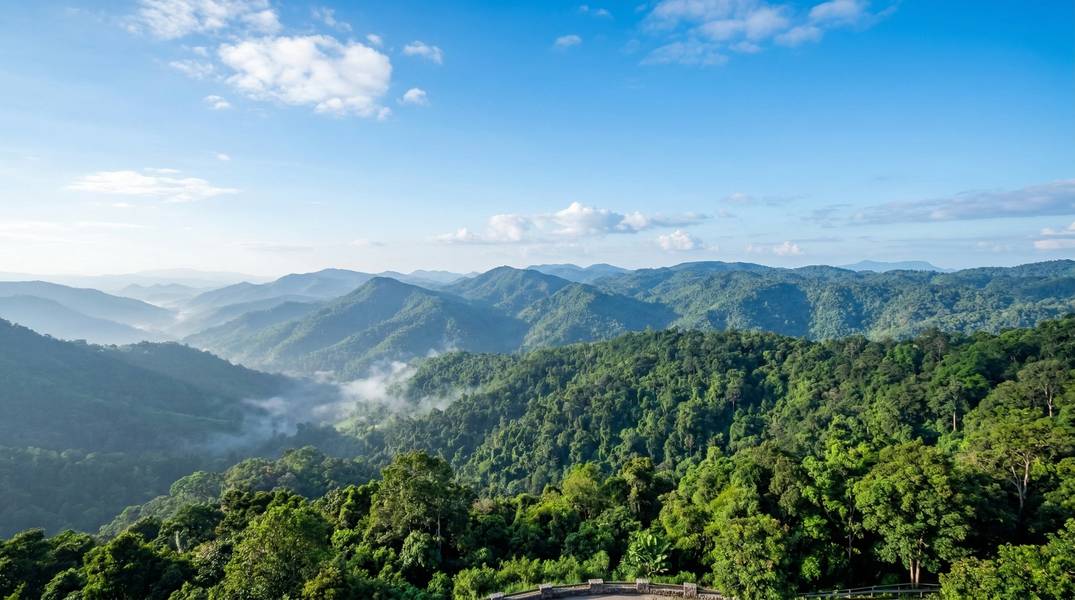
Khao Yai National Park
Overview
อุทยานแห่งชาติเขาใหญ่ • Khao Yai National Park
Established in 1962 as Thailand’s first national park, Khao Yai is part of the Dong Phayayen-Khao Yai Forest Complex—a UNESCO World Heritage Site inscribed in 2005. Spanning 2,168 sq km across four provinces, this ancient forest offers international visitors one of Southeast Asia’s most accessible wildlife experiences just 2.5 hours from Bangkok.
For medical tourists recovering from procedures in Thailand, Khao Yai provides a therapeutic escape from Bangkok’s heat and humidity. The park’s elevation (400-1,351m) keeps average temperatures around 21°C—significantly cooler than the capital. Vehicle-based activities like scenic drives and night safaris require minimal physical exertion, while the easy 1.2 km Trail 1 offers recovering patients a gentle introduction to Thailand’s natural heritage.
Important: Park fees, hours, and trail conditions are subject to change. Verify current information at the official park website before your visit. Wildlife sightings cannot be guaranteed.
Why Khao Yai is Special
UNESCO World Heritage Recognition
The Dong Phayayen-Khao Yai Forest Complex was inscribed as a UNESCO World Heritage Site on July 14, 2005. At 6,155 sq km, it’s the second-largest forest complex in Thailand and one of Asia’s most important wildlife corridors.
Key conservation achievements:
- 2,500+ plant species (17% of Thailand’s plant biodiversity)
- 16 endemic plant species found nowhere else on Earth
- 9 endemic animal species including the critically endangered Siamese crocodile
- Critical elephant corridor connecting forest habitats across four provinces
Unique Biodiversity
Khao Yai is the only known location in the world where White-handed (Lar) gibbons and Pileated gibbons have overlapping ranges—and they interbreed here, creating a unique hybridization zone of global scientific importance.
The park protects:
- 1 critically endangered species: Siamese crocodile
- 4 endangered species: Asian elephant, tiger (historically), leopard cat, banteng
- 19 vulnerable species
Wildlife & Nature
What You Might See
Wildlife sightings depend on season, time of day, location, and luck. The park’s animals roam freely across 2,168 sq km of protected forest.
| Animal | Best Time | Best Location | Likelihood |
|---|---|---|---|
| Asian elephants | Late afternoon, night safari | Main roads, salt licks, grasslands | Moderate |
| White-handed gibbons | Early morning (listen for calls) | Trail 1, forest canopy | Good |
| Great hornbills | Early morning | Headquarters area, Trail 1 | Good (daily around HQ) |
| Sambar deer | Night safari | Grasslands, roadsides | Good |
| Civets | Night safari | Along roads | Moderate |
| Pileated gibbons | Early morning | Deep forest | Moderate |
| Slow loris | Night safari | Tree branches | Low-moderate |
| Clouded leopard | Night safari | Dense forest | Rare (under 5%) |
| Gaur (wild cattle) | Early morning | Grasslands | Rare |
Note: Elephants and other wildlife are wild and unpredictable. Maintain at least 50 meters distance, stay in your vehicle on roads, and never feed or approach animals.
Bird Watching
With 392 bird species, Khao Yai is one of Thailand’s premier birdwatching destinations.
Four Hornbill Species:
- Great hornbill (commonly seen around headquarters)
- Oriental pied hornbill (commonly seen)
- Wreathed hornbill (rare)
- Brown hornbill (rare)
Other Notable Species: Siamese fireback, green peafowl, bar-backed partridge, silver pheasant
Best Birdwatching Periods:
- Year-round for resident species
- March-April for migratory birds
- Early morning (before 8:00 AM) for best activity
Waterfalls
Haew Narok Waterfall
Thailand’s largest waterfall at 150 meters, falling in three dramatic tiers.
| Detail | Information |
|---|---|
| Height | 150m (3 tiers) |
| Distance from Visitor Center | 22 km by car |
| Trail Length | 1 km each way from car park |
| Difficulty | Moderate (includes 50m steep staircase) |
| Swimming | Forbidden — dangerous currents |
| Best Season | Monsoon and post-monsoon (Jun-Nov) for water volume |
Warning: Several deaths have occurred at Haew Narok due to strong currents and steep drops. Swimming is strictly prohibited. Stay behind barriers.
Haew Suwat Waterfall
Made famous by the jump scene in Leonardo DiCaprio’s “The Beach” (2000), this 20-25m waterfall is the park’s most visited.
| Detail | Information |
|---|---|
| Height | 20-25m |
| Distance from Visitor Center | 8-10 km by car |
| Trail Length | 15-minute walk from car park |
| Difficulty | Easy |
| Swimming | Permitted in plunge pool |
| Best Season | Year-round; most powerful Jun-Nov |
Kong Kaew Waterfall
The most accessible waterfall, reached via Trail 1.
| Detail | Information |
|---|---|
| Distance from Visitor Center | 1.2 km (Trail 1) |
| Difficulty | Easy |
| Time | 45 min - 1 hour round trip |
| Suitable for Recovery Patients | Yes (Week 2+) |
Hiking Trails
Trail Difficulty Overview
| Trail | Distance | Time | Guide Required | Medical Tourist Suitability |
|---|---|---|---|---|
| Trail 1 | 1.2 km (loop) | 45 min - 1 hr | No | Yes — Week 2+ |
| Trail 2 | Short | 1-2 hr | No | Yes — Week 2-3 |
| Trail 7 | 3 km (one-way) | 2 hr | No | Yes — Week 3+ |
| Trail 3 | Medium | 2-3 hr | Yes | No |
| Trail 4 | Medium | ~2 hr | Yes | No |
| Trail 5 | 22 km | 6.5-7.5 hr | Yes | No |
| Trail 6 | 8 km | ~5 hr | Yes | No |
Trail 1: Visitor Center to Kong Kaew Waterfall (Recommended for Recovery)
The most suitable trail for recovering medical tourists.
- Distance: 1.2 km circular loop
- Difficulty: Easy
- Time: 45 minutes to 1 hour
- Start: Hanging bridge behind Visitor Center
- Guide Required: No
- Highlights: Gibbons (early morning), hornbills, Kong Kaew Waterfall
- Surface: Mostly well-maintained; some uneven sections
- Shade: Good forest canopy coverage
Tip: Arrive before 8:00 AM for the best chance of seeing gibbons and hornbills with fewer crowds.
Trail 7: Pha Kluai Mai to Haew Suwat Waterfall
A moderate option connecting the campground to the famous waterfall.
- Distance: 3 km one-way
- Difficulty: Easy to moderate
- Time: ~2 hours
- Guide Required: No
- End Point: Haew Suwat Waterfall (swimming possible)
Trails 3-6: Ranger-Guided Only
These trails are more challenging with denser vegetation, steeper terrain, and wildlife. Rangers are mandatory due to:
- Risk of getting lost (multiple hikers have spent unplanned nights in the jungle)
- Wildlife encounters (elephants, snakes)
- Slippery conditions after rain
Guide Cost: 500-1,000 THB per group Booking: Arrange at Visitor Center on arrival
Hiking Gear Recommendations
Essential:
- Long pants and long-sleeved shirt (leeches, thorns)
- Sturdy hiking shoes with grip
- Water (minimum 1.5L)
- Insect repellent
- Rain jacket (especially June-October)
Rainy Season (June-October):
- Leech socks (available in Pak Chong)
- Waterproof bag for electronics
- Change of clothes
Night Safari
One of Khao Yai’s signature experiences—and ideal for medical tourists due to minimal physical exertion.
How It Works
| Detail | Information |
|---|---|
| Duration | 45-60 minutes |
| Vehicle | High-bed pickup truck with ranger and spotlight |
| Timing | First few hours after dark |
| Extended Hours | Guests staying inside park can go until 9:00 PM |
| Walking Required | None (vehicle-based) |
What You Might See
| Animal | Probability |
|---|---|
| Nocturnal birds, civets | 80-90% |
| Sambar deer | 70-80% |
| Porcupine | 50-60% |
| Elephants | 30-50% |
| Python | ~30% |
| Leopard cat | ~20% |
| Slow loris | 20-30% |
| Clouded leopard | under 5% |
| Marble cat | under 5% |
Recommended Tour Operators
- Greenleaf Tours — Most recommended by travelers
- Tontan Travel / Thai National Parks — Good package tours with night safari
- Khao Yai and Beyond — Offers in-park accommodation with extended night safari hours
Important: Book your guide before your hotel—guides fill up faster than accommodation.
Visitor Information
Entry Fees
| Visitor Type | Fee |
|---|---|
| Foreign adult | 400 THB (~$11 USD) |
| Foreign child (under 14) | 200 THB |
| Thai adult (with ID) | 40 THB |
| Thai child | 20 THB |
| Vehicle | 50 THB |
Notes:
- Work permits, student cards, or driving licenses do NOT qualify for Thai resident rates
- Only Thai passport or Thai ID accepted for Thai resident pricing
- Pay at entry gates only (Pak Chong or Noen Hom entrance)
Prices subject to change without notice. Khao Yai is a Category 2 national park under DNP pricing.
Opening Hours
| Service | Hours |
|---|---|
| Park gates | 06:00 - 18:00 daily |
| Recommended arrival | By 15:00 for day visits |
| Night safari | After sunset (extended to 21:00 for overnight guests) |
Seasonal Closures
June 1 - September 30: Viewpoints and Pha Diao Dai Nature Trail closed for monsoon safety and trail restoration.
For Medical Tourists
Physical Requirements Assessment
| Factor | Level | Details |
|---|---|---|
| Walking Distance | Variable | 0 km (driving only) to 22+ km (Trail 5) |
| Elevation | 400-1,351m | Cooler temperatures; minimal altitude concern |
| Temperature | 15-28°C | Significantly cooler than Bangkok |
| Shade | Good on trails | Limited at viewpoints |
| Rest Areas | Good | Visitor center, campsites, in-park restaurant |
| Mobile Signal | Patchy | Good at visitor center; limited elsewhere |
Recovery Week Recommendations
| Activity | Difficulty | Earliest Safe | Ideal Week | Key Considerations |
|---|---|---|---|---|
| Scenic driving | Easy | Week 1 | Week 1+ | No walking required; air-conditioned vehicle |
| Night safari | Easy | Week 1 | Week 1+ | Vehicle-based; no physical exertion |
| Trail 1 (1.2 km) | Easy | Week 2 | Week 2-3 | Flat, shaded, short duration |
| Haew Suwat Waterfall | Easy | Week 2 | Week 2+ | 15-minute walk from parking |
| Trail 7 (3 km) | Easy-Moderate | Week 3 | Week 3+ | Longer duration; manageable terrain |
| Haew Narok Waterfall | Moderate | Week 4 | Week 4+ | 1 km walk + 50m steep stairs |
| Trails 3-6 | Challenging | N/A | N/A | Not recommended during recovery |
Procedure-Specific Guidance
| Procedure Type | Earliest Visit | Recommended Activities |
|---|---|---|
| Dental (simple) | Week 1 | Scenic driving, night safari |
| Dental implant | Week 2 | Scenic driving, Trail 1 (short visit) |
| LASIK | Week 2 | All activities; bring sunglasses for bright conditions |
| Minor cosmetic | Week 2 | Scenic driving, Trail 1, night safari |
| Rhinoplasty | Week 2 | Vehicle-based only; minimal sun exposure |
| Abdominal surgery | Week 3 | Limited walking; scenic driving preferred |
| Orthopedic (minor) | Week 3 | Vehicle-based; avoid uneven trails |
| Cardiac procedures | Week 4+ | Consult cardiologist; avoid heat exposure |
| Hip/knee replacement | Week 6+ | Doctor approval required; trails not recommended |
Medical Advisory: Consult your treating physician before outdoor activities post-surgery. The park’s remote location means medical facilities are 25-30 minutes away. Early morning visits (06:00-09:00) avoid midday heat.
Why Khao Yai Suits Medical Tourists
- Cooler climate: Average 21°C vs. Bangkok’s 30°C+
- Flexible activity levels: From zero walking (driving, night safari) to gentle trails
- Day trip feasible: 2.5-3 hours from Bangkok hospitals
- Nature therapy: Forest environment supports mental wellness during recovery
- Quality medical backup: Bangkok Hospital Pakchong 25-30 minutes away
Nearest Hospitals
| Hospital | Distance | Travel Time | Type | Key Services |
|---|---|---|---|---|
| Bangkok Hospital Pakchong | 25-30 km | 25-30 min | Private | 24-hour emergency, orthopedics, internal medicine |
| Bangkok Hospital Khao Yai | Near park | 20-25 min | Private | Emergency referral, helicopter services |
| Maharat Nakhon Ratchasima | ~90 km | 1.5 hours | Public | Full tertiary care |
Bangkok Hospital Pakchong: First private hospital in Pak Chong district with quality certification. Advanced life support ambulances available. 31 beds.
Emergency Contacts:
- National Emergency: 1669
- Tourist Police: 1155
- Park Office: +66 86 092 6527
Getting There
From Bangkok by Car (Recommended)
| Detail | Information |
|---|---|
| Distance | 175-200 km |
| Duration | 2.5-3 hours |
| Route | Highway 1 (Phahonyothin) → Highway 2 (Mittraphap) → Highway 2090 to park |
A car is strongly recommended as there’s no public transportation inside the park.
From Bangkok by Public Transport
Step 1: Bangkok to Pak Chong
| Option | Departure | Duration | Cost |
|---|---|---|---|
| Bus/Minivan | Mo Chit (Northern Bus Terminal) | 3.5-4 hours | 265 THB |
| Train | Hua Lamphong / Bang Sue | 3-4 hours | 60-500 THB |
Step 2: Pak Chong to Park Gate
| Option | Details | Duration | Cost |
|---|---|---|---|
| Songthaew | From central stand (east of giraffe statue) | 40 min | 30-100 THB |
| Public bus | Pak Chong-Khao Yai bus, every 30 min, 06:00-17:00 | 40 min | 15 THB |
| Private taxi | From Pak Chong town | 30-40 min | 200-300 THB |
Important: Songthaews to the park operate until 16:30 only.
Inside the Park
There is no public transport inside the park.
Options:
- Personal/rental car — Most flexible
- Tour with private transfer — Recommended for visitors without vehicles
- Mountain bike rental — 200 THB/day at visitor center (for fit visitors only)
Accommodation
Inside the Park
Bungalows (Book via DNP website, 7-60 days in advance):
| Capacity | Price (THB) |
|---|---|
| 2 people | 800 |
| 8 people | 2,400 |
| 20 people | 9,000 |
- Condition: Basic—wood/concrete construction, fans, hard beds, wet bathrooms
- Zones 1-2: Near visitor center, more convenient
- Zones 3-4: Remote, require vehicle, no restaurants nearby
- Booking: DNP website only; payment within 2 days via 7-Eleven or Thai bank transfer
- Note: International visitors may have difficulty with payment process
Camping at Lam Ta Khong Campground:
- Large open grassland beside river (otters often seen)
- Tent and sleeping gear rental available on-site (cannot pre-book)
- Deer frequently visit the campground
Outside the Park (Pak Chong Area)
Advantages of staying outside:
- Wider accommodation range (budget to luxury)
- Closer to medical facilities
- More restaurant options
- Easier booking process
Luxury Options:
- InterContinental Khao Yai
- Botanica Khao Yai
- Hotel des Artists
Budget/Mid-range: Multiple options in Pak Chong town (~30 km from park gate)
Seasonal Guide
Month-by-Month Conditions
| Month | Weather | Temperature | Rainfall | Medical Tourist Rating |
|---|---|---|---|---|
| January | Cool, dry, sunny | 17-29°C | Very low | Excellent |
| February | Cool, dry | 18-30°C | Low | Excellent |
| March | Warming | 20-32°C | Low-moderate | Good |
| April | Hot | 21-32°C | Moderate | Fair (heat caution) |
| May | Hot, rain begins | 22-27°C | High (17 rain days) | Fair |
| June | Rainy | 22-27°C | Heavy | Not recommended |
| July | Rainy, humid | 22-27°C | Heavy | Not recommended |
| August | Peak rain | 22-27°C | Heaviest (8.8”) | Not recommended |
| September | Rainy | 22-27°C | Heavy | Not recommended |
| October | Rain easing | 21-28°C | Moderate | Fair (late month) |
| November | Cool season begins | 18-28°C | Low | Excellent |
| December | Cool, dry | 15-27°C | Very low | Excellent |
Best Months for Specific Activities
| Activity | Best Months | Notes |
|---|---|---|
| Wildlife viewing | Nov-Feb | Animals more active in cool weather |
| Elephant sightings | Nov-Feb | Best visibility, animals at salt licks |
| Birdwatching | Nov-Apr | Resident birds; migration peak Mar-Apr |
| Waterfall viewing | Jul-Nov | Maximum water flow (trails may be closed) |
| Hiking | Nov-Feb | Dry trails, comfortable temperatures |
| Photography | Nov-Feb | Clear skies, good light |
Seasonal Warnings
Rainy Season (June-October):
- Trails muddy and slippery
- Leeches very active
- Some viewpoints closed
- Flash flood risk near waterfalls
- Reduced visibility
Hot Season (March-May):
- Midday temperatures uncomfortable
- Higher heat exhaustion risk for recovery patients
- Visit early morning (06:00-09:00) only
What to Bring
Essential Items
- Clothing: Long pants and long sleeves (required for trails)
- Footwear: Sturdy hiking shoes with good grip
- Water: Minimum 1.5L per person
- Sun protection: Hat, sunscreen, sunglasses
- Insect repellent: Essential
- Rain gear: Lightweight jacket (year-round)
- Camera: For wildlife and scenery
- Cash (THB): For entry fees, food, guides
- Offline maps: Download before entry (patchy signal)
Rainy Season Additions (June-October)
- Leech socks (available in Pak Chong)
- Waterproof bag for electronics
- Change of clothes
- Plastic bags for wet items
- Quick-dry towel
For Recovery Patients
- Prescribed medications
- Hospital contact card with emergency numbers
- Cooling towel or portable fan
- Comfortable seat cushion for long drives
- Light snacks for energy
- Electrolyte drinks (available at visitor center)
Environmental Responsibility
Park Rules
Khao Yai is a protected UNESCO World Heritage Site. Follow these rules:
- No feeding wildlife — Disrupts natural behavior and endangers both animals and visitors
- No collecting — Plants, animals, rocks, and soil must remain in the park
- No littering — Carry out all trash; dispose properly at bins
- No loud music — Disturbs wildlife and other visitors
- Stay on marked trails — Protects vegetation and your safety
- No flash photography of nocturnal animals — Causes distress
Ethical Wildlife Guidelines
- Maintain 50+ meters from elephants
- Stay in vehicle on roads when wildlife is present
- Never approach or corner animals
- Report injured wildlife to rangers
- Use binoculars rather than approaching for closer views
Plastic-Free Initiatives
Many national parks in Thailand are reducing single-use plastic. Consider:
- Bringing a reusable water bottle
- Avoiding styrofoam containers
- Using reusable bags
Nearby Attractions
Within the Park
| Attraction | Distance from Visitor Center | Notes |
|---|---|---|
| Pha Diao Dai Cliff | Variable | Viewpoint; closed June-September |
| Observation towers | Various | Nong Pak Chee, Mo Sing |
| Salt licks | Along roads | Wildlife gathering points |
Outside the Park
| Attraction | Distance | Description |
|---|---|---|
| PB Valley Winery | ~20 km | Thai wine tasting, restaurant with views |
| Wat Pa Sutthawat | Near Pak Chong | Forest temple |
| Pak Chong Night Market | Pak Chong town | Local street food, Thai produce |
| Pak Chong Morning Market | Pak Chong town | Fresh produce, local goods |
Part of UNESCO Complex
The Dong Phayayen-Khao Yai Forest Complex includes several connected parks:
- Tab Lan National Park
- Thap Lan National Park
- Pang Sida National Park
- Ta Phraya National Park
Common Scams to Avoid
”Park is Closed” Scam
Individuals outside the park may claim the park is closed to redirect you to shops or private tours.
The truth: Khao Yai is open daily 06:00-18:00 year-round. Drive directly to the official entrance gates.
Unofficial Guides
Only hire guides through the official Visitor Center or reputable tour operators. Unlicensed guides may lack training and emergency protocols.
Inflated Transfer Prices
Negotiate taxi/songthaew prices before departing. Ask your hotel for standard rates or use tour operators with fixed pricing.
Useful Thai Phrases
| English | Thai | Pronunciation |
|---|---|---|
| Hello | สวัสดี | Sa-wat-dee |
| Thank you | ขอบคุณ | Khob khun |
| How much? | เท่าไหร่? | Thao rai? |
| National park | อุทยานแห่งชาติ | Ut-tha-yan haeng chat |
| Elephant | ช้าง | Chang |
| Waterfall | น้ำตก | Nam tok |
| Trail/path | เส้นทาง | Sen thang |
| Help! | ช่วยด้วย! | Chuay duay! |
Safety Summary
- Wildlife: Maintain safe distance; never feed or approach animals
- Trails: Stick to marked paths; guides mandatory for Trails 3-6
- Water: No swimming at Haew Narok; check conditions before swimming elsewhere
- Weather: Be prepared for sudden rain; avoid trails during heavy downpours
- Heat: Early morning visits; stay hydrated; rest frequently
- Communication: Download offline maps; limited mobile signal
- Medical: Bangkok Hospital Pakchong is 25-30 minutes away; carry emergency contacts
Disclaimer: Outdoor activities involve inherent risks. Weather conditions, trail conditions, and wildlife behavior are unpredictable. Medical tourists should consult their physician before visiting. Park fees, hours, and regulations may change without notice.
Frequently Asked Questions
What is the best time to visit Khao Yai National Park?
The cool and dry season from November to February offers the most pleasant conditions—temperatures range from 15-28°C with minimal rainfall. This is also peak wildlife viewing season. Avoid June-October when heavy monsoon rains make trails muddy and slippery, and leeches are abundant.
Is Khao Yai suitable for medical tourists recovering from procedures?
Yes, with appropriate activity selection. Vehicle-based activities (scenic driving, night safari) are suitable from Week 1 post-procedure. Trail 1 (1.2 km, easy) is manageable from Week 2-3 for dental or minor cosmetic patients. The park's cooler temperatures (average 21°C) provide relief from Bangkok's heat. Consult your doctor before any outdoor activities post-surgery.
Can I see wild elephants at Khao Yai?
Wild Asian elephants (200-400 in the park) can be spotted, particularly in late afternoon along main roads or during night safaris. November-February offers the best chances. However, wildlife sightings are never guaranteed—animals roam freely in 2,168 sq km of protected forest. Maintain safe distance (50+ meters) and stay in your vehicle.
Do I need a guide for hiking?
Trails 1, 2, and 7 can be hiked independently—they're shorter, well-marked, and beginner-friendly. Trails 3-6 require a mandatory ranger guide (500-1,000 THB per group) due to difficulty, wildlife, and risk of getting lost. Guides can be arranged at the visitor center.
Is there mobile phone signal in the park?
Mobile signal is patchy inside the park. Coverage is generally good around the visitor center and main roads but limited or absent on trails and in remote areas. Download offline maps before entering and inform someone of your plans. The visitor center has reliable signal for emergencies.
How do I get to Khao Yai from Bangkok?
By car (2.5-3 hours via Highway 1 and 2) is most convenient as there's no public transport inside the park. Alternatively, take a bus from Mo Chit to Pak Chong (3.5-4 hours, 265 THB), then songthaew to the park gate (30-100 THB, 40 min). Tours with private transfer are recommended for visitors without vehicles.
Can I stay inside the park?
Yes. Basic bungalows (800-9,000 THB) and camping at Lam Ta Khong Campground are available. Book via DNP website 7-60 days in advance—payment must be made within 2 days at 7-Eleven or Thai banks. Tent rental is available on-site but cannot be pre-booked. Many visitors stay in Pak Chong town (30 km) with more accommodation options and closer to medical facilities.
What should I wear to Khao Yai?
Long pants and long sleeves are strongly recommended—leeches are common during rainy season (June-October), and thorny vegetation lines many trails. Wear sturdy hiking shoes with good grip. Bring layers as temperatures drop significantly at night (below 10°C in December-January). Leech socks are advisable for wet season visits.
Is swimming allowed in the waterfalls?
Swimming is permitted at Haew Suwat Waterfall's plunge pool but is strictly forbidden at Haew Narok Waterfall due to dangerous currents—deaths have occurred. Always observe posted safety signs and check current conditions with rangers.
Need Help Planning Your Visit?
Our team can help coordinate your visit to Khao Yai National Park during your stay in Thailand.
Check your insurance coverage before booking your medical trip.